
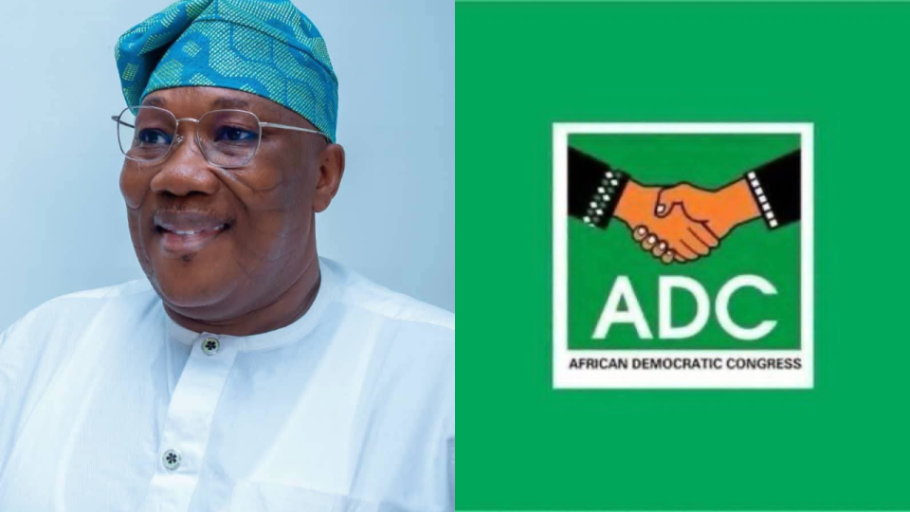
I have been following with keen interest some of the analyses surrounding the just-concluded Osun State Governorship Election, particularly narratives from certain commentators and media practitioners who appear determined to downplay the political influence of the National Secretary of the African Democratic Congress (ADC), Ogbeni Rauf Aregbesola, by relying solely on the number of votes recorded by the party.
Some of these analysts have pointed to the less than 18,000 votes secured by ADC as evidence that Ogbeni Aregbesola has lost his political relevance in Osun. Such conclusions, however, appear too simplistic for anyone who genuinely understands the complexities of Nigerian politics and electoral strategy.
A reasonable political analyst should understand that election results do not always tell the entire story. Political negotiations, alliances, strategic decisions and other developments that take place behind the scenes can significantly influence the eventual outcome of an election. Therefore, judging an individual’s political influence solely by the final figures recorded by his party may lead to a misleading conclusion.
Those who followed the activities of ADC in the build-up to the election would recall the vigorous campaigns, mobilisation efforts and political engagements undertaken by the party. Considering the personalities involved and the level of political activity witnessed across the state, it would be unreasonable to simply conclude that the less than 18,000 votes recorded by ADC accurately represented the party’s actual political strength or the influence of its leading figures.
Take Ejigbo Local Government Area, the home base of the ADC governorship candidate, for instance. Under normal circumstances, one would reasonably expect the candidate to secure a significantly higher number of votes there alone. This naturally raises questions about the political dynamics and strategic developments that may have influenced the final outcome.
It is therefore rather hasty for anyone to use the election figures as the sole basis for declaring Ogbeni Rauf Aregbesola a “biggest loser,” as some commentators, including Babajide Kolade Otitoju, have attempted to do. Such an interpretation either reflects a limited understanding of political realities or an unwillingness to acknowledge the complexities surrounding the election.
Political influence should not be measured only by the number of votes recorded by a party in a single election. Aregbesola’s political history, grassroots connections, organisational experience and longstanding influence in Osun politics cannot simply be erased by one electoral result.
There is also a need to acknowledge the circumstances under which ADC participated in the election. A political party operating without the kind of enormous financial resources available to some established political forces, yet still able to mount a serious campaign and make its presence felt, deserves recognition rather than ridicule.
Nobody is saying ADC’s performance should not be critically examined. Indeed, every political organisation must learn from its electoral performance. However, serious analysis must go beyond the figures on the result sheet and examine the political circumstances, strategies and developments that produced those figures.
Using the outcome of the election to completely dismiss Ogbeni Rauf Aregbesola’s political relevance is, at best, an oversimplification and, at worst, an attempt to deliberately misrepresent political reality.
Those who understand politics know that elections are often the culmination of numerous visible and invisible political calculations. It takes more than simply looking at the final figures to understand what actually happened.
For those genuinely interested in understanding Osun politics, the more important question is not merely “How many votes did ADC score?” but “What political forces, strategies and circumstances produced that result?”
That is where genuine political analysis begins.